Specialized Care
Vertigo & balance disorders, comprehensive allergy management & immunotherapy, thyroid disorders, head & neck concerns
Benefits
Common conditions we treat
These are the conditions where Dr. Prathiba Reddy's dual specialization in ENT and allergy medicine makes the most difference. Many patients arrive after seeing multiple doctors without a clear diagnosis — the overlap between ENT, allergy, and balance disorders is where generalist care often falls short.
Vertigo & balance disorders Room-spinning episodes, unsteadiness, or a floating sensation. Vertigo is a symptom, not a diagnosis — the cause could be BPPV (loose crystals in the inner ear), vestibular neuritis, Ménière's disease, or less commonly, central nervous system issues. We systematically identify which one, because treatment is completely different for each. BPPV, for example, is often resolved in a single visit with repositioning manoeuvres.
Allergy management Persistent sneezing, runny nose, itchy eyes, nasal congestion, or skin reactions that follow seasonal or environmental patterns. We offer structured allergy assessment to identify specific triggers, followed by a management plan that may include avoidance strategies, medication, or immunotherapy (allergy shots/drops) for long-term desensitization. Dr. Reddy's published research in this area — including co-authoring "The Allergy Blueprint" — reflects a depth of expertise beyond standard ENT practice.
Thyroid evaluation (ENT perspective) A visible neck swelling, difficulty swallowing, voice changes, or a thyroid nodule found incidentally on imaging. As a head and neck surgeon, Dr. Reddy evaluates thyroid lumps and nodules from a surgical perspective — assessing whether a biopsy (FNAC) is needed, interpreting results, and advising on whether observation, medication, or surgery is appropriate.
Head & neck concerns Lumps, swellings, or persistent symptoms in the neck, jaw, or salivary gland area. These are often benign (reactive lymph nodes, cysts, salivary gland stones) but require proper assessment to rule out anything that needs further investigation.
Ideal Candidate
How we diagnose specialized conditions
These conditions require careful, systematic evaluation because symptoms often overlap or mimic other problems. In your consultation, you can expect:
Detailed history — symptom pattern, triggers, duration, previous investigations and treatments, any relevant medication or medical history.
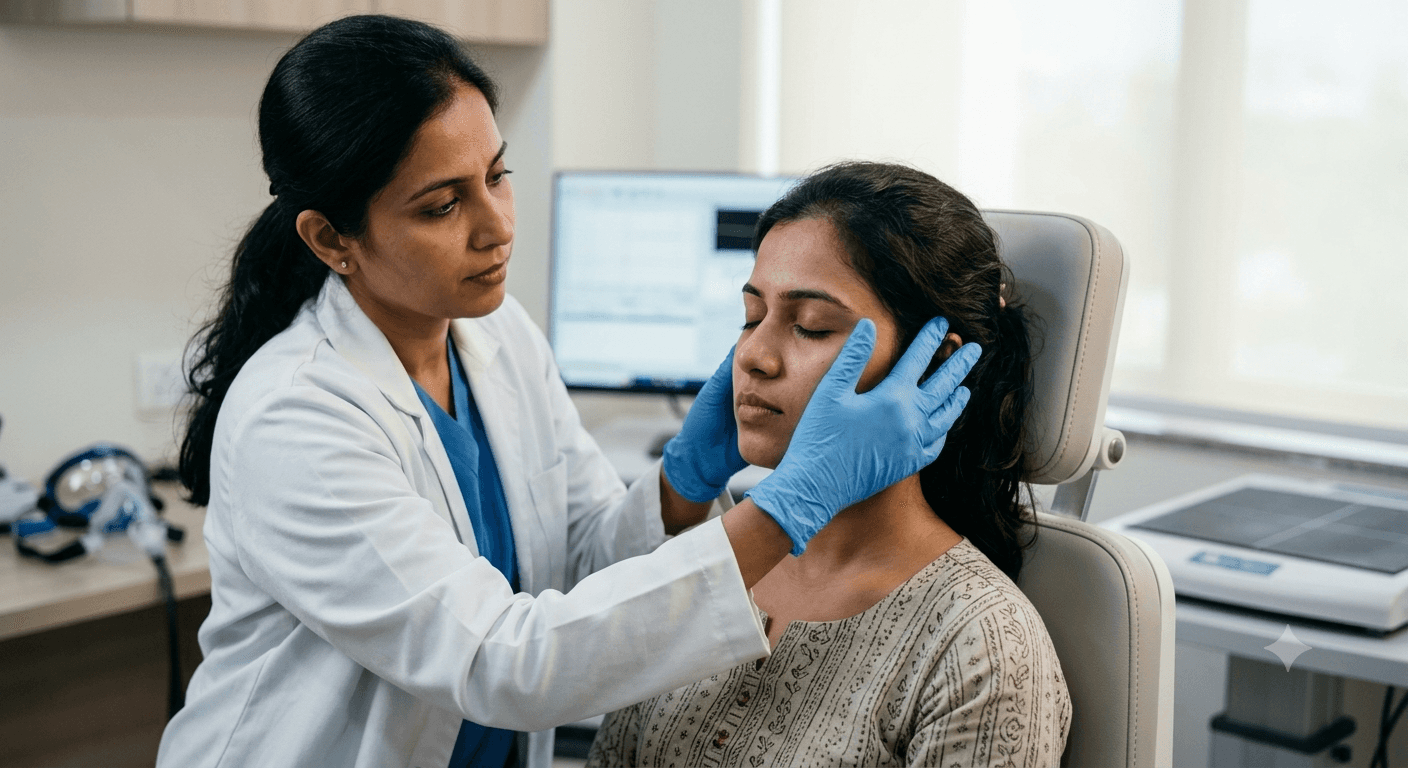
Vertigo-specific testing — positional testing (Dix-Hallpike, roll test) to identify BPPV, gaze assessment, and clinical balance tests. These are done chair-side in the clinic.
Allergy assessment — skin prick testing or specific IgE blood tests to identify environmental, food, or drug triggers. Results guide a personalized management plan.
Neck and thyroid examination — clinical palpation, ultrasound assessment, and fine-needle aspiration cytology (FNAC) for nodules when indicated.
Flexible endoscopy — to evaluate any impact on the airway, voice box, or swallowing when head and neck symptoms are present.
The goal is a clear diagnosis and a plan you understand — not a referral loop.
Process Overview
What to expect from treatment
Dr. Prathiba Reddy's approach is to treat conservatively first and escalate only when necessary. For specialized conditions, that means:
Diagnosis-first approach Many patients arrive having been treated for the wrong condition. The first priority is getting the diagnosis right — vertigo has at least five common causes, and the treatment for each is different.
In-clinic procedures when applicable Epley manoeuvre for BPPV (often resolves vertigo in one session), allergy desensitization protocols, or FNAC for thyroid nodules — done in-clinic without hospital admission.
Medical management and long-term planning Vestibular rehabilitation exercises, allergy immunotherapy schedules, thyroid medication optimization, or monitoring protocols for nodules that don't need immediate intervention.
Surgical intervention only when clearly indicated Thyroid surgery, salivary gland surgery, or excision of head and neck masses. Always preceded by a thorough discussion of why surgery is recommended, what the alternatives are, and what recovery involves.
Common Questions
Frequently Asked Questions
Can vertigo be cured?
What's the difference between dizziness and vertigo?
How long does allergy immunotherapy take to work?
Should I be worried about a thyroid nodule?
What causes recurring neck lumps?